Let's talk about your project.
An initial conversation — in person or online. You outline your plans, and we give you an honest assessment.
Applications need ongoing maintenance, monitoring, and security updates, without them, they slowly become liabilities. If you want to have your Django or Python application maintained, we take over custom software, including undocumented legacy systems from other teams, and keep it secure and up to date with a fixed monthly budget and direct access to the engineers.

Modern web applications are made up of multiple interconnected layers: backend services, frontend interfaces, APIs, databases, infrastructure, and a long list of third-party integrations. Each of these layers evolves on its own schedule, with its own release cycles, deprecation timelines, and security advisories. Keeping a web application healthy means keeping all of these layers compatible with each other while the ground shifts underneath them.
This is why web application maintenance is rarely a single task. A framework upgrade can trigger changes in dependencies, which can affect the database driver, which can change how the application talks to its infrastructure. A browser API update can break a frontend component that the backend depends on for a critical workflow. The work isn't just about applying patches. It's about understanding how a change in one layer ripples through the others and managing that change to keep the system stable.
We make sure your whole stack, from infrastructure to web application, stays stable. We specialize in maintaining both frontend and backend, specifically, Django on the backend and React on the frontend, and work with trusted partners such as Scalingo to ensure your infrastructure is also maintained properly.
Our Service Level Agreement(SLA) defines exactly what you can rely on: how quickly we respond, what we monitor, and how we keep the system secure and compliant. For critical failures, we guarantee a maximum agreed response time based on the maintenance tier during business hours, and 24/7 automatic monitoring. For clients with stricter sovereignty requirements, we migrate and manage hosting under SecNumCloud, the ANSSI certification widely regarded as Europe's strictest standard for cloud sovereignty.

Continuous incident detection with proactive alerting so issues are addressed before they escalate.
Ongoing tracking of response times, slow queries, and database load.
Runtime and dependencies are kept current without additional effort from the client.
Dependency scanning and SBOM documentation meeting EU Cyber Resilience Act requirements (reporting obligations from September 2026).
ISO 27001-certified infrastructure with all data held exclusively in the EU and outside the reach of the US CLOUD Act.
Annual WCAG 2.1 AA review aligned with the German BFSG .
Django is known for its long-term stability, maintainability, and backwards compatibility. This makes it a strong foundation for building business-critical applications. However, maintaining a Django application involves more than simply upgrading the Django framework itself. It also typically involves updating Python versions, third-party packages, database drivers, and the supporting infrastructure that the application runs on.
As a result, maintaining a production Django application requires familiarity not just with the framework but with its broader ecosystem, Django ORM behavior across versions, package compatibility, security advisories, deployment tooling, and the conventions of the specific codebase. If a business doesn't have dedicated Django developers in-house, a software support contract with a specialized Django agency is often the most practical way to handle long-term maintenance.
React powers the user-facing side of many modern web applications. It's a strong choice for building interactive, responsive interfaces, but the React ecosystem moves quickly. New versions of React, its supporting libraries, and the build tools around it can release breaking changes within weeks of each other, and what looks like a small update can quickly turn into work across many parts of the application.
Maintaining a React application means keeping it compatible with browsers, APIs, and backend systems, all of which also update regularly. Without regular maintenance, frontend applications gradually become harder to update, less stable, and more difficult to integrate with newer systems and services. Outdated dependencies can also introduce security vulnerabilities and compatibility issues that affect both reliability and user trust.
Although React is our preferred frontend framework, we also work with applications built on Vue, Stencil, and other modern frameworks, so existing systems don't need to be rebuilt to come under maintenance.
Mittelstand(Small and medium enterprises) companies face a specific challenge: software is critical to operations, but building a full in-house engineering team is often impractical. They need reliability and expertise without the overhead of recruitment, management, and retention.
Score Media Group is one example. We built PimScore, the Product Information Management system that automates surveys across their network of 420 regional newspapers, and have continued to develop and maintain it ever since. New features get added as their business grows, and we monitor the system around the clock, with an average uptime of over 99.9%.
Software that supports day-to-day operations needs more than occasional fixes. It needs someone responsible for keeping it healthy, year after year. That's what a long-term support contract gives you: a dedicated team that knows your codebase, watches over it continuously, and is ready to act when something needs attention.
We handle the ongoing work that keeps software healthy. Our goal isn't just to keep your system running, but also to keep improving it in a controlled, predictable way, so the software continues to serve the business as the business changes.
Logistics systems are typically of critical importance, and downtime or disruptions can genuinely be expensive, which is why software takeovers in this sector demand particular care and attention to detail.
We inherited Rhenus's existing logistics suite from a previous maintainer, then migrated the entire stack from a Kubernetes setup to Heroku without a single unplanned outage along the way.
That migration required upgrading the application's stack, rewriting parts of the codebase made outdated by those upgrades, and ensuring that the intricate data synchronization between the ERP and the dispatch server kept working throughout, without data loss or corruption.
The broader point is that taking over complex software written by someone else, stabilizing it, modernizing it, and keeping it running for the people who depend on it day-to-day is a core part of what we do.
Public sector systems are held to a higher bar on reliability because the work they support can't simply pause when the software goes down.
For the Senate Department for Economic Affairs, Energy, and Public Enterprises in Berlin, we built EWM, the data platform that tracks how research and development funds are deployed across the state and turns the results into decision-ready insights for policy-makers. EWM has run at over 99.9% uptime since launch, which is the standard you need when the system is the primary tool for understanding where multi-million-euro funding is going and what impact it's having.
For the Landesinstitut für Schule in Bremen, we built ZAP, the web application that administers 10th-year final exams across the state's schools, used day-to-day by teachers and school administrators to order exam materials, manage students, and capture results. ZAP also runs at over 99.9% uptime. During exam windows, that reliability isn't a nice-to-have, it's critical. Every school in the state uses it to administer exams, so hours of downtime translate directly into missed deadlines and disrupted results.
Yes. Taking over applications, including ones with little or no documentation, is a part of what we do. Before we touch any code, we start with a thorough audit. We seek to understand the architecture, dependencies, and any undocumented quirks or workarounds baked into the system.
This lets us build an accurate picture of what we're working with before making changes, so we don't break something that isn't obvious from the outside. For more complex or critical systems, this discovery phase can take a bit longer, but it's time well spent.
A monthly maintenance contract typically covers:
In addition, you can also book:
Yes, we maintain both iOS and Android apps, primarily using cross-platform frameworks.
Yes. We can migrate your application to an EU-sovereign host or any other hosting provider of your choosing. As part of the process, we'll assess your current system and recommend a hosting setup that fits your technical needs, compliance requirements, and budget.
Here are a few projects we currently maintain for Mittelstand and logistics companies.
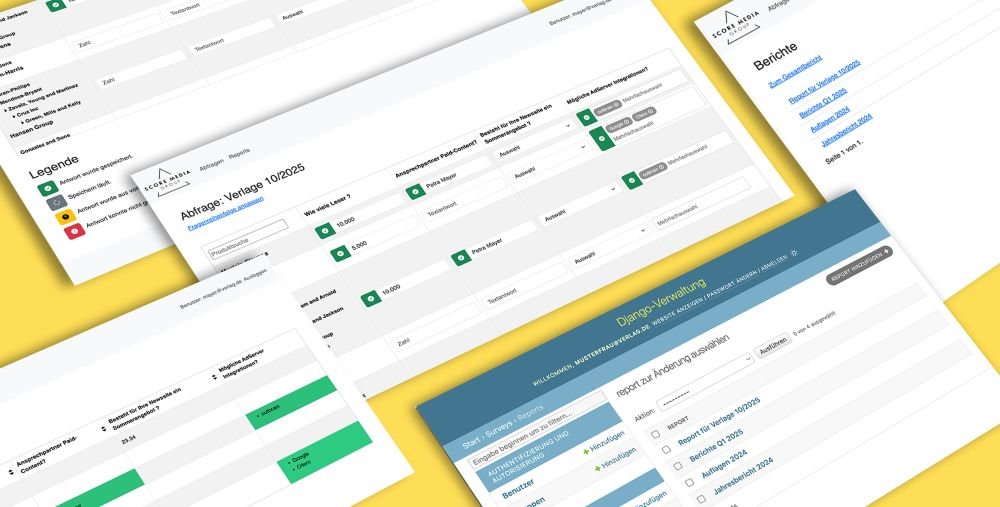
We developed and continue to maintain Pimscore, a Product Information Management (PIM) platform for the Score Media Group. In addition to ongoing feature development, we provide long-term maintenance, dependency updates, security improvements, infrastructure support, and operational oversight to ensure the platform remains stable and reliable.
read more →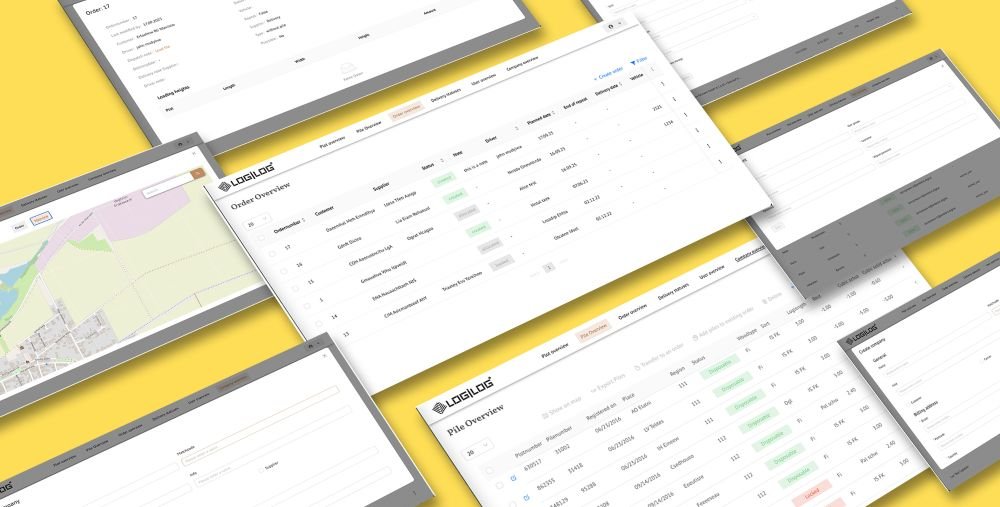
We maintain a suite of logistics applications for the Rhenus Group, including an Enterprise Resource Planning (ERP) system, a dispatching web application, and a hybrid mobile application for iOS and Android. After taking over the applications from a previous agency, we performed upgrades and migrations, addressed technical debt, and continue to provide ongoing maintenance and support. This ensures that the applications remain secure, maintainable, and capable of supporting day-to-day logistics operations.
read more →An initial conversation — in person or online. You outline your plans, and we give you an honest assessment.
djangsters GmbH
Vogelsanger Straße 187
50825 Köln
Social Media

